How Multi-Threaded Selling and Building the Closing Strategy From First Contact Drives Revenue Growth
The pressure on modern sales teams has never been higher. Buyers are more informed, and purchasing decisions involve larger buying committees. On the other side, organizations are investing heavily in AI, CRM platforms, and sales enablement tools with the expectation of stronger results. Yet, many companies continue to experience stalled deals, shrinking margins, and inconsistent sales performance.
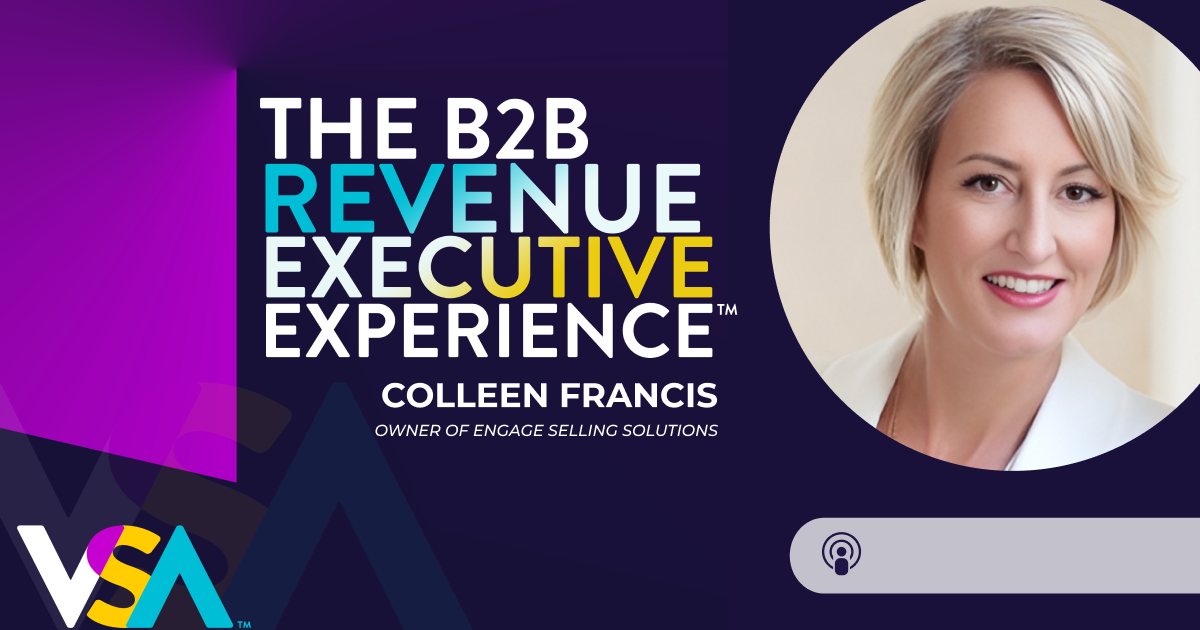
According to Colleen Francis, LinkedIn’s #1 sales strategist, author, and keynote speaker, the problem is rarely the technology. Instead, it is more often the way sales organizations approach the buying process. Teams focus on efficiency before effectiveness, they rely too heavily on individual relationships, and treat closing as something that happens at the end of the sales cycle instead of something that begins with the very first conversation.
In this episode of The B2B Revenue Executive Experience, Colleen joins host Cory Cotten-Potter to discuss why an effective B2B sales strategy today should focus more on sales team accountability, and how leaders can improve sales effectiveness through better coaching, stakeholder engagement, and value-based selling. They also explore the role AI will play in the future of B2B sales and why stronger technology alone will never replace human-led nurturing and great sales execution.
Closing Starts Long Before the Proposal
Many sales professionals view closing as the final stage of the sales process. The legacy sales process starts with discovery, followed by presentations, pricing, negotiations, and finally a signed contract.
Colleen believes that this approach creates unnecessary friction for the potential client.
Instead, successful sellers begin preparing for the close during the very first customer conversation. They identify who will influence the decision, understand the implementation process, uncover potential blockers, and establish clear expectations about how the buying journey will unfold.
This proactive approach creates what Colleen describes as a "closing map." Rather than reacting to objections late in the process, sales teams learn to anticipate them early.
When sellers fail to build this roadmap, deals often appear healthy until pricing is presented. Then momentum suddenly disappears, and what looks like hesitation is frequently a sign that critical stakeholders were never involved or that important implementation questions were left unanswered.
Improving sales pipeline management means looking beyond activity metrics and instead focusing on whether every stage of the buying process is preparing the potential customer to make a confident decision.
Multi-Threading Prevents Deals From Stalling
One of the biggest reasons B2B opportunities stall is that salespeople rely too heavily on a single client-side contact.
While one stakeholder may champion a solution, they are rarely the only person influencing the final decision. Procurement, finance, operations, IT, HR, compliance, and executive leadership may all evaluate the purchase from different perspectives.
This is where multithreading in sales processes becomes essential.
Rather than building one strong relationship, successful sellers intentionally engage multiple people throughout the organization. Doing so helps build alignment, uncovers competing priorities, and reduces the risk that a single blocker derails the opportunity.
Many sales professionals hesitate to expand conversations because they worry about damaging trust with their primary contact. Colleen argues that this hesitation often comes from poor positioning rather than genuine customer resistance.
When sellers explain that involving additional stakeholders will improve implementation, reduce risk, and ensure long-term success, buyers are often willing to introduce the other decision-makers into the conversations.
Better stakeholder engagement strengthens relationships instead of weakening them.
Sales Effectiveness Should Come Before Sales Efficiency
AI continues to dominate conversations about the future of selling, but Colleen believes many organizations are making a familiar mistake. Every new technology promises greater productivity; CRM systems promise better forecasting, automated dialers promise more conversations, and automated email promises faster communication.
The problem is that organizations often improve efficiency without improving effectiveness.
Sales teams can now send more emails, make more calls, and automate more outreach than ever before. If those activities are poorly executed, technology simply allows them to perform ineffective behaviors at a greater scale.
The same risk exists with AI.
Rather than replacing human selling, Colleen believes AI should remove administrative work, simplify prospect research, and automate routine follow-up. That additional capacity should create more time for meaningful customer conversations, stronger discovery, and deeper relationships.
Organizations that only focus on AI’s impact on sales should also measure whether technology is creating better customer outcomes or just higher activity levels.
Why Sales Leadership Determines Technology ROI
Many companies invest heavily in CRM platforms, AI tools, and sales enablement programs expecting immediate improvements. Yet, even mature organizations often struggle to generate meaningful returns from those investments.
According to Colleen, technology rarely fails because of the platform itself. It fails because organizations overlook leadership. Without consistent coaching, accountability, and manager involvement, even the best tools become expensive databases.
She points to organizations where salespeople still manage opportunities in spreadsheets instead of updating their CRM. Poor data quality leads to inaccurate forecasting, weak coaching conversations, and unreliable decision-making.
Improving CRM effectiveness requires more than implementing software. Leaders must reinforce expectations, coach consistent behaviors, and hold teams accountable for maintaining accurate information.
Technology supports great sales organizations. It does not create them.
Great Sales Managers Coach Success, Not Just Problems
Another strong theme from the conversation is the importance of sales coaching and leadership. Many managers spend most of their time helping struggling salespeople improve. While that work matters, Colleen argues that leaders often overlook their highest performers.
Instead of only identifying weaknesses, managers should study why top performers consistently succeed.
What questions do they ask?
How do they build trust?
How do they create value?
When those behaviors become visible and repeatable, the entire sales organization benefits. Coaching should also become a regular rhythm rather than a reaction to poor performance. If coaching only happens after a bad sales call or missed target, it naturally feels corrective.
Regular coaching sessions create a safer environment where sellers can reflect on opportunities, identify patterns, and commit to specific improvements before problems become larger.
Strong sales manager training helps leaders become coaches instead of inspectors.
Stop Selling Products and Start Expanding Value
One of Colleen's most practical concepts is what she calls expanding operational value.
Too often, sellers focus exclusively on the department purchasing the solution. For instance, a manufacturing automation company may sell directly to operations because productivity improvements justify the investment.
However, that same solution may also reduce workplace injuries, lower recruitment costs, improve customer service, increase production capacity, and strengthen financial performance.
Once those additional benefits become part of the conversation, the purchase is no longer viewed through the lens of a single department's budget. It becomes an organizational investment.
This broader perspective creates stronger internal alignment while making price less important. Effective value-based selling helps customers recognize benefits they had not previously considered.
Instead of competing solely on features or price, sellers become trusted advisors who understand how business decisions across different business verticals affect the entire organization.
Differentiate the Sales Process Instead of Discounting
Many industries believe discounting is unavoidable.
Commodity markets, technology purchases, and highly competitive industries often assume buyers will negotiate aggressively before signing. Colleen challenges that assumption.
Research consistently shows buyers value a differentiated buying experience. When sellers ask better questions, engage different stakeholders, uncover broader business challenges, and provide fresh insights, they separate themselves from competitors offering similar products.
A differentiated sales process shifts attention away from price and toward business outcomes. Now, instead of comparing two similar products solely on price, buyers begin comparing two very different sales experiences and outcomes.
That distinction often reduces the need for discounting while improving long-term customer relationships.
AI Will Raise Expectations, Not Replace Sellers
Looking ahead, Colleen believes the biggest change in B2B sales is not widespread AI adoption.
It is the expectation that follows.
As AI reduces administrative work, organizations will expect sales teams to invest that recovered time in higher-value activities. More customer conversations, deeper discovery, stronger relationship building, and improved account growth will become the gold standard.
Rather than replacing salespeople, AI will raise performance expectations.
Organizations that combine technology with disciplined coaching, effective leadership, and better customer engagement will create lasting competitive advantages. Those that rely on automation alone will simply become faster at ineffective selling.
The core lessons from this conversation are clear: B2B sales strategy is no longer about closing harder or working longer. It is about building a multi-threaded sales strategy, strengthening sales team accountability, building value across the buying committee, and coaching consistent behaviors that drive long-term results. AI can make sellers more productive, but sustainable growth still depends on people who know how to build trust, create value, and lead customers confidently through complex buying decisions.
What You’ll Learn:
- How to position closing as a day-one activity, not as a late-stage skill
- Why 80% of deals can close without discounting by expanding operational value
- The multithreading resistance problem and how to overcome it
- How AI will increase sales targets, not replace salespeople
- Why sales managers fail to coach top performers, and why they should
- Using the differentiated sales process as your competitive moat
Key Insights:
- [07:42] Start Closing Earlier with a Clear Stakeholder Map
Colleen explains that successful B2B sales strategy begins with the close in mind, not with the proposal. Sellers who identify stakeholders, decision-makers, implementation owners, and potential blockers early avoid the deal stalls that often appear after pricing discussions. Building a closing map during discovery helps teams understand who influences the purchase, why they matter, and what value each person expects, creating stronger alignment and smoother decisions throughout the sales process.
- [11:51] Use Multithreading to Build Stronger Buying Alignment
Colleen explains that many sellers avoid multithreading in sales because they fear damaging relationships with their primary contact. The outcome is stalled deals and missed opportunities when unseen stakeholders influence the decision. Instead, position additional conversations as a way to strengthen the customer's internal business case. By engaging multiple departments early and tailoring value to each stakeholder, sellers create broader alignment that accelerates decisions and improves close rates.
- [19:03] Improve Sales Effectiveness Before Scaling AI
Colleen argues that AI should improve sales effectiveness before it improves efficiency. Many organizations automate poor selling habits, producing more emails, calls, and outreach without better customer outcomes. She recommends using AI to streamline research, administrative work, and follow-up so sellers can spend more time building relationships and engaging buying committees. Strong leadership, CRM discipline, and internal accountability ensure AI supports better execution rather than simply increasing activity.
- [23:16] Coach Top Performers Through Consistent Development
Colleen believes great sales coaching and leadership focus on understanding why top performers succeed instead of only correcting mistakes. Regular coaching sessions build confidence, uncover repeatable winning behaviors, and encourage continuous improvement. Rather than treating coaching as a response to poor performance, managers should create structured conversations that help sellers reflect, share successful strategies, and develop skills that can be replicated across the entire sales team.
- [28:51] Expand Value Across Departments to Reduce Discounting
Colleen explains that value-based selling becomes far more powerful when sellers demonstrate how a solution benefits multiple departments instead of only the primary buyer. Expanding operational value across finance, HR, operations, customer service, and sales creates stronger organizational support and reduces pressure to discount. By connecting business outcomes to each stakeholder's priorities during discovery, sales teams differentiate themselves and position their solution as a strategic investment rather than a commodity purchase.
- [37:42] AI Will Raise Sales Expectations, Not Replace Sellers
Colleen predicts that AI's biggest impact will be higher expectations for sales performance rather than fewer salespeople. As automation removes administrative work, organizations will expect sellers to invest that extra time in relationship building, stakeholder engagement, and strategic selling. Sales leaders who strengthen coaching, accountability, and sales team management will help their teams meet rising quotas while using AI to enhance, rather than replace, human customer interactions.
FAQs
1. Why do B2B deals often stall after the pricing stage?
Many deals lose momentum because sellers focus on a single contact and fail to engage the broader buying committee early in the nurturing process. Pricing often exposes unanswered questions from finance, operations, or implementation teams that were never included in previous conversations. Building stakeholder alignment from the beginning helps prevent delays, reduces uncertainty, and creates a smoother path toward a confident purchasing decision.
2. How can sales leaders improve coaching without micromanaging their teams?
Effective coaching is built on consistency rather than correction. Instead of waiting until a deal goes wrong, sales leaders should schedule regular coaching sessions that explore successful behaviors, identify improvement opportunities, and encourage self-reflection. This approach builds trust, strengthens accountability, and helps both top performers and developing sellers improve without making coaching feel punitive.
3. How should AI be used to improve B2B sales performance?
AI delivers the greatest value when it removes repetitive administrative work. It will never replace customer conversations. Sales teams can use AI for research, meeting preparation, follow-up support, and identifying additional stakeholders, thereby giving sellers more time to build relationships and uncover customer needs. The goal is to improve sales effectiveness first, with efficiency becoming a natural outcome.
4. Why is value-based selling more effective than competing on price?
Value-based selling shifts the conversation from product features and discounts to measurable business outcomes. By showing how a solution benefits multiple departments across the organization, sellers create stronger internal support and demonstrate broader return on investment. This wider business impact makes it harder for competitors to win on price alone and helps protect long-term profit margins.
Share this post


Explore More