How CROs Build Scalable Sales Cultures That Drive Exponential Revenue Growth
Maintaining a healthy and positive company culture is often the first casualty in periods of exponential growth. But it doesn’t have to be that way.
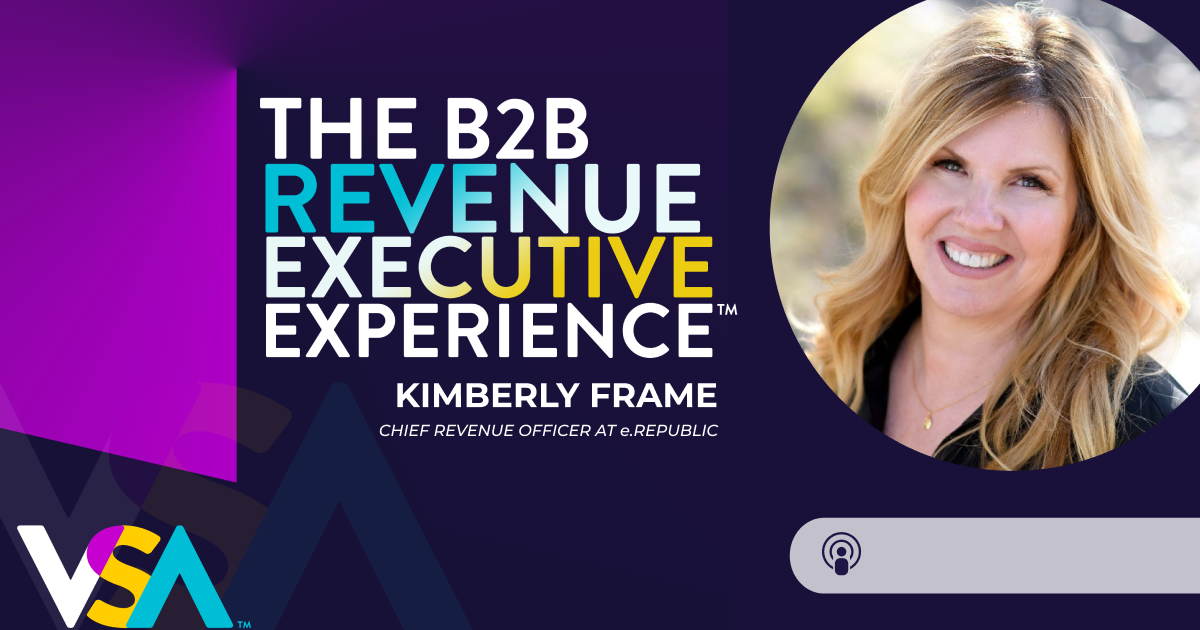
In this episode of The B2B Revenue Executive Experience, Kim sits down with host Cory Cotten-Potter to discuss what it takes to build scalable and high-performing sales teams that drive revenue growth. They explore the transition from individual contributor to leader, the importance of sales culture, how to align sales and delivery, and why investing in sales training becomes increasingly important as organizations experience exponential growth.
What You’ll Learn:
- How a player-coach role can test whether someone can develop others
- Which 'puzzle pieces' need to be in place before leaders commit to a growth target
- How sales, delivery, and operations can share accountability for customer outcomes
- How recognition, shared incentives, and peer pods can strengthen collaboration
- Why formal training, authentic leadership, and human connection matter more as teams scale
Build a Sales Culture Around Collaboration
Traditional sales culture often emphasizes individual performance, competition, rankings, and pressure. Kim has taken a different approach by building a sales culture where people are encouraged to celebrate one another and actively contribute to each other's success.
During the pandemic, she introduced a shared commission structure and a real-time channel where every new contract was celebrated by the broader team. The system created collective ownership around revenue performance. Sellers still had individual targets, but they also understood that everyone had a stake in the overall number.
The compensation structure has since evolved to follow evolving markets and best practices, but that sense of shared responsibility remained—it became an important part of the company's sales accountability model.
Kim also developed a mentorship in sales approach by pairing experienced sellers with newer team members. These relationships eventually developed into pods, with experienced sellers acting as player-coaches who could share knowledge, provide guidance, and help newer team members ramp up faster.
Peer learning sales models like this can be particularly valuable as organizations grow. Instead of concentrating knowledge within a small group of managers, companies can distribute expertise throughout the sales organization.
Build the Puzzle Pieces Before Setting the Goal
Revenue growth targets are only realistic when the organization has the infrastructure required to achieve them.
Kim explores this concept with her "puzzle pieces" framework. Before committing to an ambitious number, revenue leaders need to understand whether the necessary programs, tools, training, processes, and support systems are actually in place.
This is an important principle for sales enablement and sales team management. Leaders cannot simply set a larger target and expect sellers to figure out how to reach it. If the organization needs new programs, better content, stronger training, improved processes, or additional operational support, those needs must be identified before they become expectations.
This approach also changes the relationship between sales leadership and the executive team. Instead of simply accepting a revenue target, the CRO can explain what needs to be true for the team to achieve it.
The result is a more realistic and practical revenue growth strategy where accountability works in both directions. Leaders hold sellers accountable for performance while also taking responsibility for giving them the tools and support required to succeed.
Fix the Sales-to-Delivery Handoff
Fact: A strong sales process can quickly break down if the transition from sales to delivery is poorly managed.
Kim shares the structured approach at e.Republic that brings sales, delivery, and operations together before new programs and products are launched. Different functions have the opportunity to review the offering, challenge assumptions, and identify potential problems before making customer commitments.
This creates a much stronger customer success handoff. Sellers document customer goals and expectations, participate in kickoff calls, and remain connected to what happens after the contract is signed.
The approach also creates shared accountability. Delivery teams have responsibility for revenue targets within their areas of the business, which means they are not simply receiving orders from sales. They become active participants in the revenue strategy.
For organizations looking to improve sales and delivery alignment, this creates a valuable shift. Instead of treating the handoff as the moment when responsibility moves from one team to another, both teams remain accountable for the customer's outcome.
Replace Fear With Support and Accountability
Kim also rejects traditional tactics such as public shaming and stack ranking. When someone is struggling, the conversation happens privately and focuses on practical solutions rather than embarrassment.
This does not mean lowering expectations. The team still has targets, and revenue performance remains important. The difference is that accountability is combined with support.
For example, when a seller needs to create more pipelines, Kim does not simply tell them that they are behind. The leadership team provides specific actions they can take and encourages them to speak with other sellers about what is working.
This creates an environment where asking for help is not viewed as a weakness; it becomes part of the normal operating model.
For leaders trying to build high-performing sales teams, that distinction matters. Fear can create short-term compliance, but collaboration creates a stronger foundation for sustainable performance.
Great Salespeople Do Not Always Make Great Sales Leaders
One of the most common mistakes in sales team management is assuming that individual sales excellence translates directly into leadership capability. Top performers are often promoted because they consistently hit their numbers, win major accounts, and demonstrate strong sales skills.
However, sales leadership requires a fundamentally different set of capabilities. The job shifts from personally generating revenue to helping others generate it.
For organizations considering a sales manager transition, a player-coach model can provide a useful testing ground. Rather than immediately removing a top seller from their accounts, leaders can give them responsibility for coaching a small group while allowing them to continue selling. This provides an opportunity to evaluate whether they can inspire, develop, and support others before making a permanent leadership decision.
The transition from individual contributor to leader requires a change in mindset. Success is no longer measured only by what you can accomplish, but by what the entire team can achieve.
Invest in Sales Training Before Growth Stalls
Exponential growth creates its own set of challenges. What works when a company is smaller may not be sufficient when the organization doubles in size.
e.Republic doubled the size of the company in four years, creating a need to become more sophisticated about how the sales organization operated. Kim recognized that sustained growth could not depend entirely on adding new products, programs, or simply asking the existing team to work harder.
Instead, the company invested in sales training and value selling to help the team become more effective at communicating the value of its offerings.
This is an important lesson for any revenue leader pursuing an exponential growth strategy. When growth accelerates, the organization needs to increase its capabilities in parallel. Formal training, sales enablement, peer learning, and stronger processes can help turn rapid growth into sustainable growth.
Growth itself cannot become a strategy. Organizations need to build the capabilities that allow them to sustain it.
Lead With Authenticity
Kim's advice for leaders entering a new CRO strategy or revenue leadership role is simple: bring the qualities that made you successful with you.
Leaders do not need to create an artificial leadership persona or abandon the characteristics that built their careers. Authenticity, integrity, confidence, and the willingness to stand behind what they believe can become powerful leadership assets.
The first 90 days in a new leadership role can create pressure to immediately prove yourself. That pressure can lead leaders to adopt tactics or behaviors that do not fit their or the company's values.
Kim's experience suggests that effective leadership is less about becoming someone new and more about understanding what already works, then applying those strengths at a larger organizational level.
Building Growth That Lasts
The central lesson from Kim's experience is that revenue growth is not created by sales alone. High-performing sales teams depend on leadership, culture, enablement, training, collaboration, and strong relationships across the organization.
The most effective sales leaders create the conditions that allow their teams to succeed. They make sure the puzzle pieces are in place before setting ambitious goals. Sustainable growth calls for developing future leaders instead of simply promoting top sellers, strengthening the sales and delivery relationship, and creating cultures where accountability and support co-exist. Exponential growth becomes a reality when the people, processes, and culture supporting that growth evolve alongside the numbers.
Key Insights:
- [00:00] Why Top Sellers Do Not Always Make Great Leaders
Kim explains why sales excellence and sales leadership require very different capabilities. Organizations often promote top sellers into management without assessing whether they can coach, inspire, and develop others. She recommends using a player-coach model as a practical way to test leadership potential while allowing strong sellers to maintain some accounts. This approach helps organizations identify genuine leadership capability without sacrificing valuable sales talent or creating unnecessary disruption.
- [14:15] Build the Right Pieces Before Chasing Bigger Goals
Kim shares her "puzzle pieces" framework for setting ambitious revenue goals. Before committing to a target, leaders need to ensure the necessary programs, tools, training, processes, and support are in place. Rather than expecting teams to somehow deliver unrealistic numbers, revenue leaders should identify what is required to succeed and secure executive support. This creates greater accountability, protects team morale, and gives sellers a realistic path toward achieving growth targets.
- [15:19] Turn Sales Handoffs Into Shared Revenue Accountability
Kim explains how structured collaboration between sales, delivery, and operations can prevent customer problems caused by poorly managed handoffs. e.Republic uses cross-functional reviews, detailed customer notes, and shared kickoff calls to ensure expectations remain aligned. Giving delivery teams responsibility for revenue targets also makes them active participants in growth rather than passive order-takers. The result is stronger sales and delivery alignment, faster issue resolution, and a more consistent customer experience.
- [21:33] Build a Sales Culture Where Everyone Wins Together
Kim describes how shared incentives, real-time recognition, and peer mentorship helped create a collaborative sales culture during the pandemic. A shared commission structure encouraged everyone to care about the team's overall performance, while a real-time channel celebrated every contract win. She also introduced pods that pair experienced sellers with newer team members. These practices strengthen sales accountability while creating an environment where people actively help one another succeed.
- [30:03] Replace Sales Pressure With Support and Recognition
Kim rejects stack ranking and public shaming as sales management tactics. Instead, she focuses publicly on celebrating achievements while addressing performance challenges privately and constructively. When sellers fall behind, the leadership team provides practical solutions, shares best practices, and encourages peer learning. This approach creates psychological safety without removing accountability. Over time, people who experience genuine support become more willing to support others, creating a stronger and more collaborative sales culture.
- [39:14] Bring Your Authentic Self Into Revenue Leadership
Kim shares advice for anyone stepping into a new CRO or revenue leadership role: trust what made you successful and bring those qualities with you. Rather than adopting a leadership persona that feels unnatural, she encourages leaders to stay authentic, protect their integrity, and trust their judgment. The first 90 days should not be about becoming someone else. Strong leadership comes from applying your existing strengths with greater responsibility and influence.
FAQs:
- What makes someone an effective sales leader?
Being a top seller does not automatically make someone an effective sales leader. Strong sales leadership requires coaching, communication, accountability, and the ability to develop others. Kim recommends evaluating leadership capability separately from individual sales performance. A player-coach model can help organizations assess leadership potential while maintaining sales productivity and developing future leaders.
- How can companies build a high-performing sales culture?
A high-performing sales culture combines accountability with collaboration, recognition, and peer learning. Kim describes how shared incentives, real-time recognition, and sales mentorship helped create collective ownership at e.Republic. Rather than relying on pressure or public rankings, leaders can celebrate team success, provide private support, and encourage experienced sellers to help newer team members develop.
- How can sales and delivery teams improve alignment?
Sales and delivery alignment starts with shared accountability and structured communication. Kim explains how e.Republic uses cross-functional reviews, detailed customer notes, and kickoff calls to create smoother customer success handoffs. Giving delivery teams revenue responsibility also encourages them to participate in growth. These practices reduce overpromising, improve execution, and create stronger customer relationships.
- How can revenue leaders sustain exponential growth?
Sustaining exponential growth requires more than increasing sales targets. Revenue leaders need the right puzzle pieces, including sales enablement, training, processes, tools, and cross-functional support. Kim also emphasizes value selling and peer learning as organizations scale. Investing in sales training and developing internal leadership capabilities helps high-performing sales teams maintain momentum without relying solely on increased individual effort.
Share this post


Explore More