GTM Alignment: The Revenue Operations Strategy
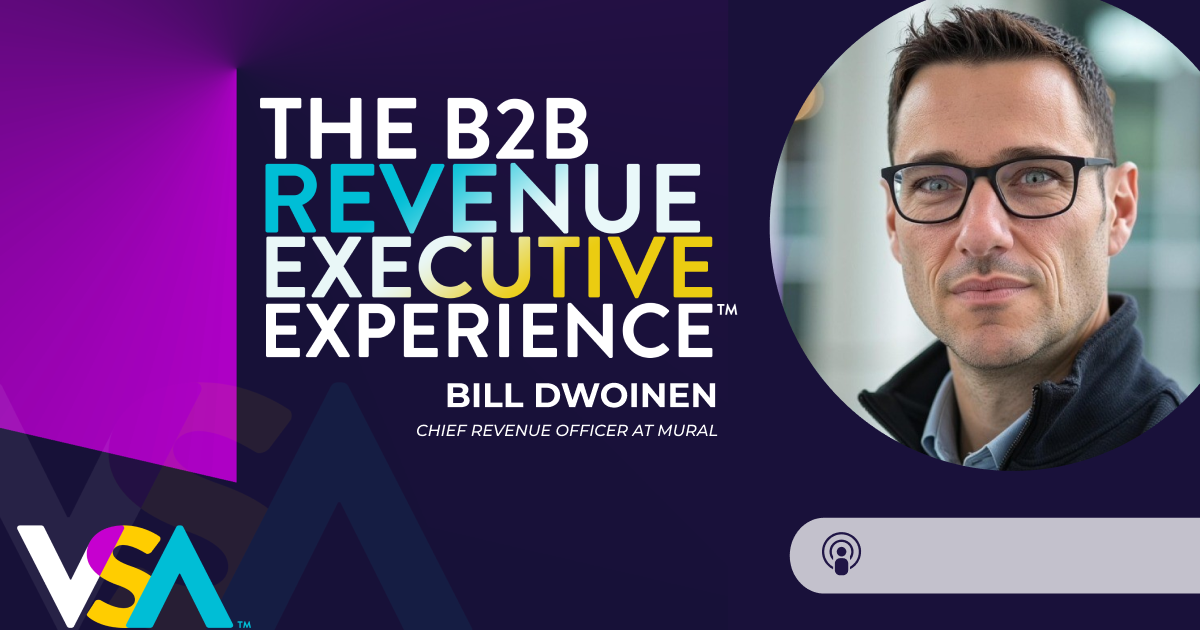
GUESTS: Bill Dwoinen, Chief Revenue Officer at Mural
Listen to the full episode:
Spotify - Stitcher - TuneIn - Apple Podcasts
Summary:
True GTM alignment requires more than collaboration; it demands consistent outcomes across the entire customer journey.
In this episode, Cory sits down with Bill Dwoinen, Chief Revenue Officer at Mural, to deconstruct the myths of revenue alignment.
With over 20 years of experience scaling teams at powerhouses like Slack and Salesforce, Bill explains why consistent alignment throughout the customer journey drives faster closes and leads to happier customers. He breaks down the specific leadership principles required to transform team burnout into revenue momentum and how to execute a strategy that goes beyond simply “working together.”
GTM alignment in B2B sales isn’t more collaboration; it’s consistent alignment on outcomes across the full customer journey. In this episode of The B2B Revenue Executive Experience, host Cory Cotten-Potter is joined by Bill Dwoinen, Chief Revenue Officer at Mural, to break down why consistent alignment throughout the customer journey drives faster closes and happier customers, how to distinguish between collaboration and true alignment, and the leadership principles that transform burnout into momentum.
Bill Dwoinen is the Chief Revenue Officer at Mural, bringing more than 20 years of experience in scaling revenue teams. Prior to his current role, he held key leadership roles at powerhouse companies, such as Slack and Salesforce, where he was responsible for driving growth, leading global teams, and developing sales strategies focused on long-term success.
What You'll Learn:
- How to define GTM alignment as outcome ownership across time
- The fastest warning signs you’re stuck in collaboration drag
- How to structure feedback loops across sales, marketing, product, and customer success
- Which metrics move first when alignment improves
Key Quotes:
- “The true definition of alignment is consistent alignment on outcomes throughout the journey.”
- “The best leaders in the world are candid, but then they also provide support.”
- “People need clarity. I don't think you can hold people accountable without giving them clarity and support.”
- “Internal alignment is no different than customer alignment as it's not communication. It's alignment, action, and ownership.”
Key Insights:
- [14:52] - Defining GTM Alignment
True go-to-market alignment is about sustained alignment on outcomes across the entire customer journey. Teams often confuse collaboration with alignment: talking isn’t the same as moving together. When alignment only exists in moments, silos re-emerge, deals slow down, teams burn out, and customers feel the friction. The organizations that win are those that maintain consistent, shared clarity on goals, context, and progress from first conversation through the full lifecycle, ensuring everyone works toward the same outcome, in the same place, without losing the thread as complexity grows.
- [26:58] - Aligning on Customer Truths Through Operating Cadence
AI has made speed and efficiency easy. However, that’s exactly why alignment now matters more than ever. As automation saturates the market with surface-level productivity, teams that win are those grounded in a shared customer truth, clear operating rhythms, and genuine ownership. True alignment isn’t about more meetings or more tools; it’s about defining how teams work together, where customer feedback resides, and how insights are turned into action.
- [30:28] - Metrics That Prove Alignment Is Working
When customer feedback loops are working, the proof shows up first in revenue outcomes. Growth, retention, and faster close rates are the leading indicators. In a world where change is constant, and buyers scrutinize every dollar, teams must move fast, test, learn, and clearly communicate value to the market. When product, marketing, sales, and customer success operate as one, customers are better informed, deals close faster, retention improves, and trust compounds.
FAQs
- Q: What is GTM alignment?
A: GTM alignment means maintaining shared clarity on goals, ownership, and outcomes across sales, marketing, product, and customer success throughout the entire customer lifecycle, not just in isolated moments.
- Q: Why do revenue teams struggle with GTM alignment?
A: Most teams communicate frequently but fail to translate conversations into decisions, accountability, and forward motion, which gradually erodes momentum.
- Q: What changes first when GTM alignment is working?
A: Deal velocity increases, customer confidence improves, teams operate with less friction, and retention and revenue growth begin to follow.
Share this post


Explore More