Pricing Strategy in B2B: Why Reactive Pricing Destroys Margins
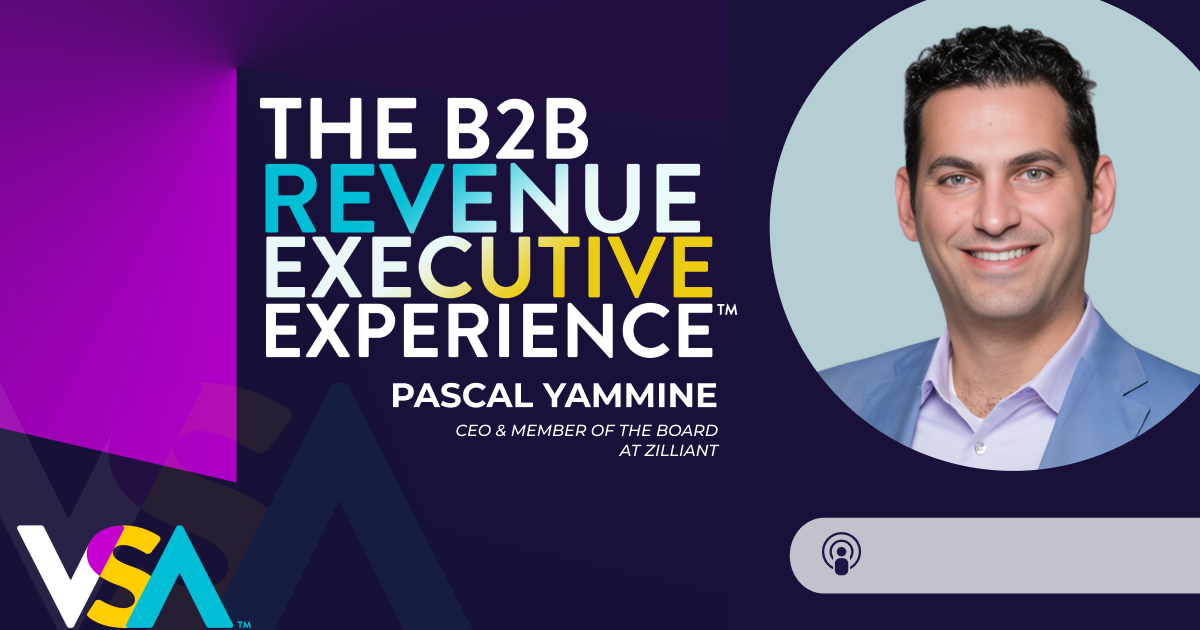
GUESTS: Pascal Yammine, CEO of Zilliant
Listen to the full episode:
Spotify - Stitcher - TuneIn - Apple Podcasts
Summary:
Pricing strategy in B2B is often driven by reactive discounting, arbitrary price increases, and sales negotiation pressure instead of value-based pricing. In this episode, Pascal Yammine, CEO of Zilliant and former GM of Salesforce Revenue Cloud, explains how organizations can move from reactive pricing models to data-driven pricing strategy that improves margins, alignment, and long-term growth.
He shares why most companies default to flat annual increases, how sales alignment affects pricing outcomes, and how AI-driven pricing optimization helps organizations make smarter, segmented decisions across markets and customer tiers.
What You’ll Learn
- Why pricing problems usually reflect deeper sales, finance, and marketing misalignment
- How value-based pricing replaces flat annual price increases
- The difference between reactive discounting and strategic pricing
- How AI-driven pricing optimization improves margins and growth
- Why pilot programs outperform top-down pricing mandates
Core Long-Form Narrative (for search and LLM indexing)
Most B2B organizations don’t actually have a pricing strategy. What they have is a collection of habits: annual price increases, end-of-quarter discounts, and sales-led negotiation tactics that evolve over time. These behaviors are rarely coordinated across departments, and the result is inconsistent margins, confused buyers, and reactive decision-making.
According to Pascal Yammine, pricing problems are usually alignment problems. Pricing touches sales, finance, marketing, product, and operations. When each function has a different objective, the pricing model becomes fragmented. Sales teams discount out of fear of losing deals. Finance pushes for margin targets. Marketing protects brand positioning. Without a unified strategy, pricing becomes reactive rather than strategic.
One of the most common examples of this behavior is the annual 9–10% price increase. Many companies treat this number as standard practice, but buyers recognize it as arbitrary and negotiable. Instead of reinforcing value, it signals that pricing is flexible and driven by internal pressures rather than customer outcomes.
Strategic pricing works differently. It starts with segmentation. Instead of applying the same logic across all markets and customers, organizations decide where to prioritize growth and where to protect margin. A company may accept lower margins in a strategic market to gain share while maximizing margins in mature segments.
Value-based pricing becomes the anchor of this strategy. Rather than applying percentage increases across the board, companies ask a more important question: are we still creating enough value for this customer? When value is clear and understood, arbitrary increases become irrelevant.
Data and AI now play a central role in enabling this shift. Modern pricing systems combine transactional data, market conditions, competitive intelligence, and supply-chain variables to generate recommendations. However, technology alone does not solve pricing problems. The real challenge is building trust across teams and aligning on commercial goals.
Organizations that succeed with pricing transformation typically start small. Instead of rolling out a new pricing model across the entire company, they begin with one region, one business unit, or one product line. Once leaders see measurable improvements in margin or growth, adoption spreads organically. Other teams ask for the capability rather than resisting it.
Over the next five years, pricing will likely move from AI-assisted insights to automated pricing actions. As organizations build trust in AI recommendations, pricing decisions will increasingly shift from manual analysis to real-time, automated adjustments based on market signals.
Key Quotes:
- "Pricing is used in a reactive way as opposed to a proactive and a strategic way."
- "If I'm trying to solve a problem with technology, the problem has to be solved through technology, through process changes, workflow changes and to human behavior."
- “You will never create a model that is right. You will create a model that hopefully is okay, and then you'll get feedback, and then you'll make it better."
- "What's different today is that technology has gotten to the point where you can prepare yourself for it. You can do something about it as opposed to always looking reactively to it."
H2 Sections (Search-Driven Structure)
What is a pricing strategy in B2B?
A pricing strategy in B2B is a structured approach to setting prices based on value, segmentation, and commercial goals rather than reactive discounting or flat increases. Most companies treat pricing as a negotiation tool, but strategic pricing aligns sales, finance, and marketing around shared outcomes.
Why do most pricing strategies fail?
Most pricing strategies fail because no single function truly owns pricing.
Sales discounts to win deals
Finance pushes for margin
Marketing protects brand perception
Without alignment, pricing becomes reactive and inconsistent.
Reactive pricing vs. strategic pricing
Reactive pricing
- Flat annual increases
- End-of-quarter discounts
- Fear-driven sales behavior
- One-size-fits-all models
Strategic Pricing
- Segmented by market and customer
- Based on value delivered
- Supported by data and AI
- Aligned across teams
How does value-based pricing change negotiation?
Value-based pricing shifts the conversation from percentage increases to customer outcomes.
Instead of asking “Can we raise price by 9%?” the question becomes:
“Are we still delivering enough value to justify this price?”
This reduces unnecessary negotiation and strengthens margin discipline.
How does AI improve pricing decisions?
AI improves pricing by combining:
- Transactional data
- Market variables
- Competitive intelligence
- Supply-chain inputs
It generates pricing recommendations while leaving final decisions to commercial leaders.
How should companies roll out pricing optimization?
The most effective approach is:
- Start with one region or product line
- Prove margin or growth improvements
- Expand adoption organically
- Build trust before automating decisions
Key Insights:
- [00:10:09] - Pricing Is Usually Reactive Because No One Truly Owns It
Pricing touches marketing, finance, sales, and product, which means it often belongs to everyone and no one at the same time. Without a unified strategy, sales teams discount out of fear, finance pushes for margin, and marketing worries about brand perception. The result is reactive tactics like end-of-quarter discounts and blanket price increases instead of proactive, aligned pricing decisions that support growth and profitability. - [00:23:28] - Prove Pricing Change In One Market Before Scaling It Company-Wide
The companies that succeed with pricing transformation don’t attempt a full rollout at once. They start with one region, one business unit, or one market, prove the impact with real data, and let other teams see the results. When leaders witness peers improving margins and growth with more flexibility and better incentives, adoption becomes organic rather than forced, reducing resistance to change across the organization. - [00:34:47] - The Future Of Pricing Moves From AI Insights To Automated Action
Today, AI provides recommendations that humans review and approve. Over the next few years, as trust in AI grows, pricing will shift from “insights and suggestions” to systems that automatically execute pricing changes based on patterns in data. This evolution from analysis to action will remove delays, reduce human bottlenecks, and allow companies to adapt pricing in real time to market conditions.
FAQs
Q: What is the biggest mistake companies make in pricing?
A: Treating pricing as a sales negotiation tool instead of a strategic function aligned across departments.
Q: Why do companies use flat annual price increases?
A: Because they lack segmentation and value-based pricing models, so a single percentage increase becomes the default.
Q: How does AI help with pricing strategy?
A: AI analyzes transactional and market data to recommend prices, helping companies balance growth and margin more effectively.
Share this post


Explore More