How AI Can Skyrocket Your Value Management with Craig LeGrande

Transforming Value Management with AI: A Guide for B2B Revenue Leaders
As Craig LeGrande of Mainstay notes, "Just over the last 5 years, you'll hear the title of value engineer has been out there. Value management teams have become departments within sales or within organizations has become more of a discipline, much more of a discipline than it was 20 years ago."
Value management used to live in a slide deck your AE pulled out during procurement negotiations. Now it's the conversation that starts before your prospect even knows your name.
Most revenue leaders I talk to think AI will solve their value management problem. They're half right. AI can scale what works—but if your value conversations are broken to begin with, you're just automating mediocrity faster.
Craig shared his insights with us in the latest episode of The B2B Revenue Executive Experience.
Key Takeaways
- Evolution of Value: Value management has shifted from a simple sales tool to a core organizational discipline.
- Early Engagement: Value conversations should begin during the buyer's initial journey, well before the first sales call.
- Value Intelligence: Establishing "value intelligence" creates a consistent, benchmark-driven voice across marketing, sales, and customer success.
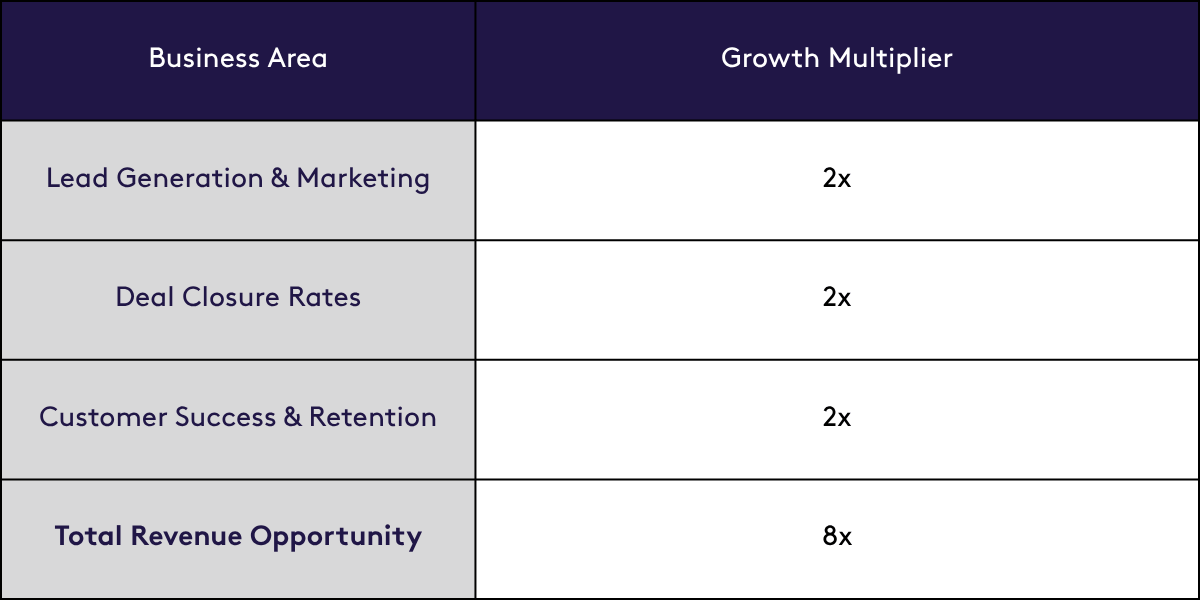
- The 8x Opportunity: Implementing AI-driven value management can lead to an 8x revenue multiplier by doubling effectiveness in lead gen, deal closure, and retention.
- Scale via Enablement: Sales enablement provides the necessary methodology to scale value management tools and practices.
Step-by-step guide to build a customer-centric value management strategy
1. The conversation starts long before the sale
Here's what most sales leaders miss: by the time your AE gets on the phone, your prospect has already decided what value looks like. The question isn't whether to have a value conversation—it's whether you're late to one that's already happening.
Craig highlights, "What we want the sales executives, the leadership of the companies to understand is that value conversation has already probably started way before the AE gets a call or gets the opportunity to talk to that CEO or executive. [...] And it's the ability to understand where that customer is in that journey so that you can have the right conversation with that customer."
2. Value intelligence shapes every conversation
Every VP of Sales has sat through a demo where the vendor promised 5,000% ROI. Every single one of them rolled their eyes. Craig calls the alternative 'value intelligence'—and the difference matters more than you think.
He explains, "What we talk about a lot in the book is this idea of value intelligence. [...] Think of it as like the overlay across marketing sales and customer success that builds that communication set that says there are solid benchmarks."
The reps who win aren't the ones with the biggest ROI claims. They're the ones who can say, 'Here's what companies like yours actually achieved, and here's why it worked.' Specificity beats hyperbole every time.
When you get this right, you stop being the vendor they tolerate and become the advisor they call before they make a move.
3. Sales enablement turns good ideas into habits
Here's the part most revenue leaders ignore until it's too late: your best rep can't clone themselves. Without enablement, you've got one rockstar and twenty people trying to reverse-engineer their magic.
Your top performers run their territories like mini-empires. That's great—until you try to replicate what they do and realize half of it lives in their head.
Implementing sales enablement helps align efforts across the team and transforms complex tasks into streamlined processes.
When your reps spend three hours building a custom ROI model for every deal, they're not selling—they're doing homework. Enablement fixes that.
"Sales enablement is super important for value management because without sales enablement, all of the processes, the tools, the practices don't have a methodology to scale."
4. AI multiplies the results
Craig's seen the numbers across enough clients to make a bold claim: get value management right, and you're looking at 8x revenue. Not 8% improvement. Eight times.
This multiplier effect comes from improvements across three key areas:
Transforming your value management practice with AI requires attention to five critical elements. First, establish your foundation by getting your value management house in order before implementing AI solutions. Second, set clear goals that define specific objectives for your value management program. Third, build cross-functional alignment to ensure marketing, sales, and customer success teams share consistent value messaging. Fourth, start small with pilot programs in specific segments or product lines. Finally, measure and iterate by continuously tracking results and refining your approach.
AI won't save a broken value management process. But if you've got the fundamentals right, it's the difference between doing this at scale and doing it one deal at a time. The revenue leaders who figure this out aren't the ones with the fanciest AI tools. They're the ones who got their value story straight first, then used technology to tell it at scale.
The key is to start with a solid value management strategy and then leverage AI as an enabler of scale and efficiency, rather than viewing it as a silver bullet solution.
Now that you know how to leverage AI to enhance your value management, discover the full list of episodes at The B2B Revenue Executive Experience. If you enjoy the show, instructions to rate and review it are found here.
Frequently Asked Questions
How is AI used in sales enablement?
When a rep opens her dashboard and it already highlights the prospect most likely to answer the phone, that is AI working behind the curtain. The software studies past calls, emails, and deal data, then nudges sellers with the right content, coaching cues, or next steps at the exact moment they matter. The result is less guesswork and more time in front of customers.
Will AI replace sales enablement teams?
Think of AI as the co-pilot, not the captain. It can crunch numbers in seconds, but it can’t read a buyer’s pause or reshape a messy go-to-market plan. Human enablers still set strategy and add context; AI simply clears the noise so they can focus on higher-value work.
What should a sales team do before rolling out AI tools?
Start by nailing the basics: agree on your value story, clean up the data that feeds your CRM, and line up marketing, sales, and customer success around a single definition of success. With that foundation, AI amplifies what already works instead of automating chaos.
Share this post


Explore More

.png)